
Your Sun sign is a beginning, not a complete identity.
It can describe something important about your vitality, self-expression and conscious direction. But it cannot explain the full range of your emotional needs, relationship patterns, work style, decision-making habits or recurring life lessons.
For that, you need the birth chart.
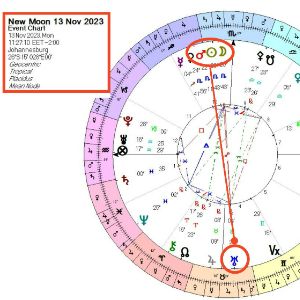
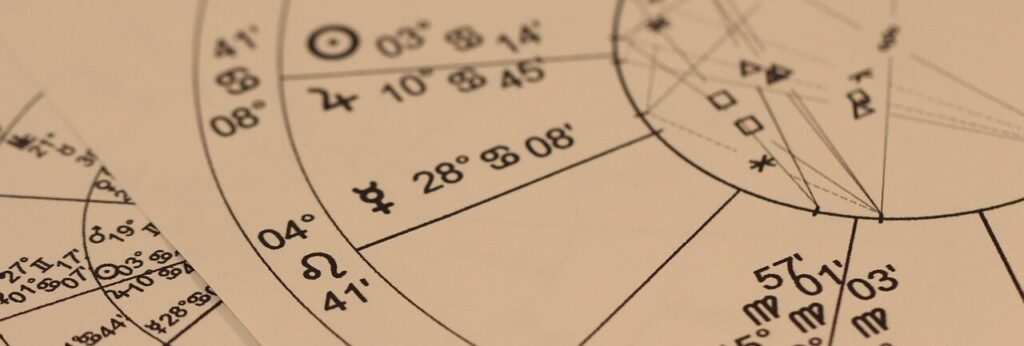
A natal chart (or birth chart), is a symbolic map of the sky at the precise time and place of your birth. It brings together planets, zodiac signs, houses and aspects to create a more complete picture of how you are wired and how you meet the world.
Your birth chart is a snapshot of the sky at your first breath, revealing potential talents, challenges and opportunities. Learning to read a birth chart helps you gain a clearer language for your patterns.
That language can help you ask better questions:
- Why do I respond this way under pressure?
- What kind of work actually suits my nature?
- Why do I repeat the same relationship dynamic?
- Which strengths am I underusing?
- What is this season of my life asking me to develop?
- How can I make a major decision with more self-awareness?
Astrology does not remove responsibility. It can make responsibility more informed.
The natal chart as a psychological map
A birth chart is not a list of personality traits. It is a system.
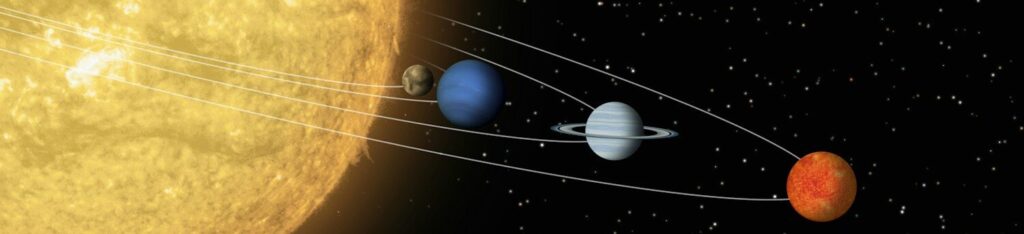
The planets describe different functions of the psyche. The signs describe how those functions operate. The houses show where those patterns unfold in practical life. Aspects describe the relationships between the functions.
A simple way to remember this is:
- Planets show what is happening.
- Signs show how it happens.
- Houses show where it happens.
- Aspects show how different parts of the chart interact.
Imagine Mars in a natal chart. Mars can describe initiative, anger, desire, courage and the instinct to act. Its sign may show whether that action is direct, cautious, strategic, persistent or analytical. Its house may show whether the person expresses this drive through career, relationships, learning, family or community.
The same planet can look very different depending on its context.
This is why an astrology reading based only on your Sun sign is often too broad to be personally useful. The chart is not one symbol. It is an ecosystem.
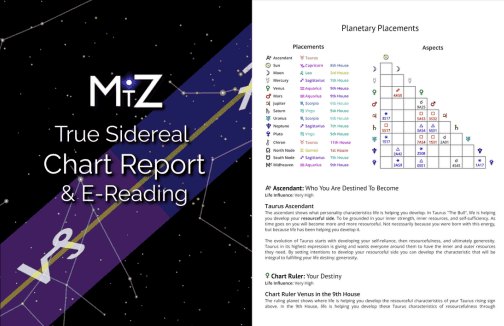
Go Deeper Than a Standard Birth Chart
A birth chart can offer valuable insight, but the way that information is interpreted matters. If you want to explore a more detailed approach, discover Mastering the Zodiac’s MTZ report.
You can enter your birth details, learn more about MTZ’s approach to astrology and generate a premium deep-dive report for $47.50 with the limited-time 50% discount.
Start with the Big Three
If you are new to natal astrology, begin with the Sun, Moon and Ascendant. These are often called the Big Three because they provide a useful first framework for understanding identity, emotional life and outward approach.

1. The Sun
The Sun represents vitality, conscious identity, creativity and the process of becoming more fully yourself.
It is not merely your public personality. It describes the part of you that wants to develop, express itself and live with purpose.
For example, a Virgo Sun may seek mastery through usefulness, precision and improvement. A Leo Sun may need creative self-expression and recognition of the heart. An Aquarius Sun may develop through independent thinking, community involvement or challenging inherited assumptions.
The sign matters, but so does the house. A Leo Sun in the sixth house may express creativity through work, service and daily systems. A Leo Sun in the tenth house may be strongly connected to public visibility or leadership.
2. The Moon
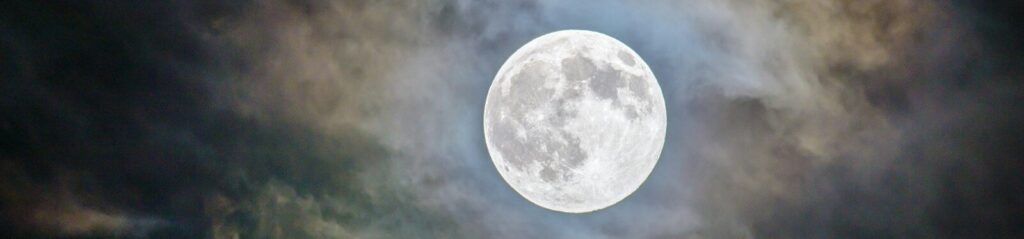
The Moon describes emotional processing, instinctive responses, safety needs and private behaviour. It often becomes especially visible when you are tired, stressed or no longer interested in managing other people’s perceptions.
Your Moon sign can help explain what restores you. Some people need quiet and predictability. Others need movement, conversation, creative stimulation or emotional intensity.
The Moon’s house shows where your emotional life requires attention. A Moon in the fourth house may place strong emphasis on home, family and belonging. A Moon in the eleventh house may feel nourished by friendship, community and shared ideals.
Understanding your Moon can be particularly useful for personal growth because it reveals needs you may ignore while pursuing external goals.

3. The Ascendant
The Ascendant, or rising sign, is the sign rising on the eastern horizon at the time of birth. It describes your first approach to life, your immediate responses, your visible style and the lens through which you encounter the world.
It also determines the house structure used in many chart systems.
Someone with Aries rising may appear direct and decisive, even if their Sun or Moon is more cautious. Someone with Libra rising may instinctively assess the social environment before acting. Someone with Scorpio rising may be observant, private and highly sensitive to power dynamics.
The Ascendant is not a mask that hides your “real” self. It is the interface between your inner life and your environment.

The twelve houses: where life happens
The twelve houses translate astrology into lived experience. They show the areas of life where planetary themes become visible.
The exact house meanings vary in emphasis depending on the sign, ruler and planets involved, but the basic framework is useful:
- The first house concerns identity, appearance, initiative and self-direction.
- The second house concerns money, possessions, values and self-worth.
- The third house concerns communication, learning, siblings and local movement.
- The fourth house concerns home, family, ancestry and emotional foundations.
- The fifth house concerns creativity, romance, pleasure, children and risk.
- The sixth house concerns work routines, health habits, service and daily systems.
- The seventh house concerns committed relationships, contracts and one-to-one partnerships.
- The eighth house concerns intimacy, shared resources, psychological transformation and trust.
- The ninth house concerns higher education, travel, philosophy, spirituality and worldview.
- The tenth house concerns career, public reputation, authority and achievement.
- The eleventh house concerns friendships, networks, community and long-term goals.
- The twelfth house concerns solitude, unconscious patterns, retreat, spirituality and release.
Do not panic if you have an empty house. An empty house is not an area of life that has been denied to you. It may simply mean that the house is not dominated by natal planets. Its sign, ruling planet and current transits still matter. The house can become highly active when a planet moves through it or aspects its cusp or ruler.
For example, a person may have no natal planets in the tenth house but experience a major career chapter when Saturn, Jupiter or Pluto activates that house ruler.
The chart is dynamic.

Planets: the functions of the psyche
To read your birth chart with more depth, learn the core functions of the planets:
- The Sun relates to vitality, identity and purpose.
- The Moon relates to feelings, security and instinct.
- Mercury relates to thinking, language and information.
- Venus relates to attraction, values, pleasure and relating.
- Mars relates to action, desire, anger and boundaries.
- Jupiter relates to growth, meaning, faith and opportunity.
- Saturn relates to structure, responsibility, limits and maturity.
- Uranus relates to disruption, innovation and freedom.
- Neptune relates to imagination, ideals, compassion and permeability.
- Pluto relates to power, transformation, compulsion and regeneration.
A planet is never interpreted in isolation. Venus in the second house may make values and resources central to relationship decisions. Venus in the ninth house may connect love with travel, learning or shared beliefs. Venus in the sixth house may express affection through practical support, routine or service.
The chart becomes meaningful when you combine the symbols.
Aspects: the internal conversation
Aspects are geometric relationships between planets. They show how different parts of your psyche communicate, cooperate or conflict. Astrology SA describes them as mathematical relationships that can reveal internal dialogue, friction points, talent and psychological integration.
The major aspects include:
- A conjunction, approximately 0 degrees, combines planetary functions.
- An opposition, approximately 180 degrees, creates polarity and awareness through contrast.
- A square, approximately 90 degrees, creates tension that demands action or adjustment.
- A trine, approximately 120 degrees, allows energy to flow with relative ease.
- A sextile, approximately 60 degrees, suggests opportunity that usually requires participation.
It is tempting to call trines good and squares bad. That is too simplistic.
A trine may describe a natural talent that the person takes for granted. If it is never developed, its ease may become passivity. A square may create frustration, but it can also generate discipline, creativity and resilience.
Suppose natal Mercury squares Saturn. This may describe self-doubt, cautious speech or fear of being wrong. It may also support careful thinking, technical skill, editing ability and disciplined communication. The aspect does not dictate one outcome. It describes a relationship between mental speed, structure and authority.
The question is not, “Is this aspect good?”
The better question is, “How does this aspect behave, and what would help these planetary functions work together?”
How to read a birth chart step by step
A practical birth chart reading does not require interpreting every minor asteroid or obscure point immediately. Start with the strongest structural information.
1. Confirm the birth data
Accurate birth time matters, particularly for the Ascendant, Midheaven and houses. If the time is uncertain, note that the house interpretation may be unreliable.
2. Identify the Big Three
Look at the Sun, Moon and Ascendant. Notice whether they share an element, modality or sign polarity.
A chart with strong fire may seek action and inspiration. Strong earth may prioritise practicality and tangible results. Strong air may process life through ideas and relationships. Strong water may be guided by emotional perception and intuition.
3. Find the chart ruler
The chart ruler is the planet that rules the rising sign. Its sign, house and aspects can describe how you navigate life and where your attention naturally goes.
For example, if you have Gemini rising, Mercury becomes your chart ruler. Mercury’s placement can tell you where communication, learning and interpretation become central to your development.
4. Look for concentrations
A stellium is a cluster of planets in one sign or house. It can create significant emphasis. Also look for repeated elements, modalities, angular planets and strong aspects to the Sun, Moon, Ascendant or chart ruler.
Repeated symbolism is usually more important than one isolated placement.
5. Interpret patterns, not fragments
Avoid collecting disconnected statements such as “Mars in the seventh means conflict” or “Saturn in the second means financial problems.” Astrology requires synthesis.
Mars in the seventh may describe conflict, but it may also describe passionate partnership, assertive negotiation or attraction to energetic people. Saturn in the second may describe financial pressure, but it can also support careful resource management and long-term stability.
Context changes the interpretation.
Turn Your Birth Details Into Deeper Insight
Ready to explore your chart in greater depth? Visit Mastering the Zodiac to enter your birth details and generate your own MTZ report.
The report is available for $47.50 with the limited-time 50% discount, offering a practical way to continue your astrology learning beyond basic chart interpretations.
What transits reveal about timing
A transit occurs when a moving planet forms an aspect to a natal planet or point, or passes through a natal house. It connects the current sky with the chart you were born with.
Transits can describe evolving priorities, external triggers, developmental chapters and periods when a natal pattern becomes more visible.
A helpful way to read a transit is to ask two questions:
- Which planet is moving now?
- What natal planet, angle or house is it contacting?
Then add three more:
- What aspect is being formed?
- How close is the orb?
- Is the planet moving toward exact contact, at exact contact or away from it?
The transit tells you what is being activated. The natal chart tells you how that activation fits into your larger pattern.
Fast-moving and slow-moving transits
The Moon, Sun, Mercury, Venus and Mars move relatively quickly. Their transits can describe short-term shifts in mood, attention, desire, conversation and action.
Jupiter, Saturn, Uranus, Neptune and Pluto move more slowly. Their transits tend to coincide with longer chapters of growth, restructuring, disruption or transformation.
A Saturn transit to your natal Sun may require you to clarify responsibilities and redefine authority. A Uranus transit to natal Venus may destabilise old relationship or financial patterns. A Jupiter transit to the tenth house may coincide with increased visibility, growth or professional opportunity.
These are possibilities, not guarantees.
Astrology can help you recognise the kind of work a period may require. It cannot replace preparation.
Orbs and timing
An orb is the acceptable distance from the exact angle of an aspect. Astrologers use different orbs depending on the planet, aspect and purpose of the interpretation.
A tighter orb usually indicates a more concentrated contact. A wider orb may describe a background influence, especially when slow-moving planets are involved.
Do not treat an orb as an on-off switch. A transit can become noticeable before it is exact and remain relevant after exactness, particularly if it repeats due to retrograde motion.
For instance, a Saturn transit may make an issue visible months before the exact aspect. The first pass may bring pressure or awareness. A retrograde pass may require review. The final pass may coincide with a decision, commitment or acceptance.
This is why tracking the complete transit cycle is often more useful than focusing on one date.
Astrology for clarity and personal growth
Astrology is most useful when it helps you replace vague self-judgement with specific observation.
Instead of saying, “I am bad at relationships,” you might notice that your Venus-Saturn pattern makes trust develop slowly and that you need consistency more than grand declarations.
Instead of saying, “I am failing in my career,” you might recognise a Saturn transit asking you to build systems, define standards and stop relying on improvisation.
Instead of saying, “Everything is falling apart,” you might see a Uranus transit challenging a structure that no longer allows growth.
This does not make every difficult experience easy. It makes the experience more intelligible.
Use your chart as a mirror, not a prison.
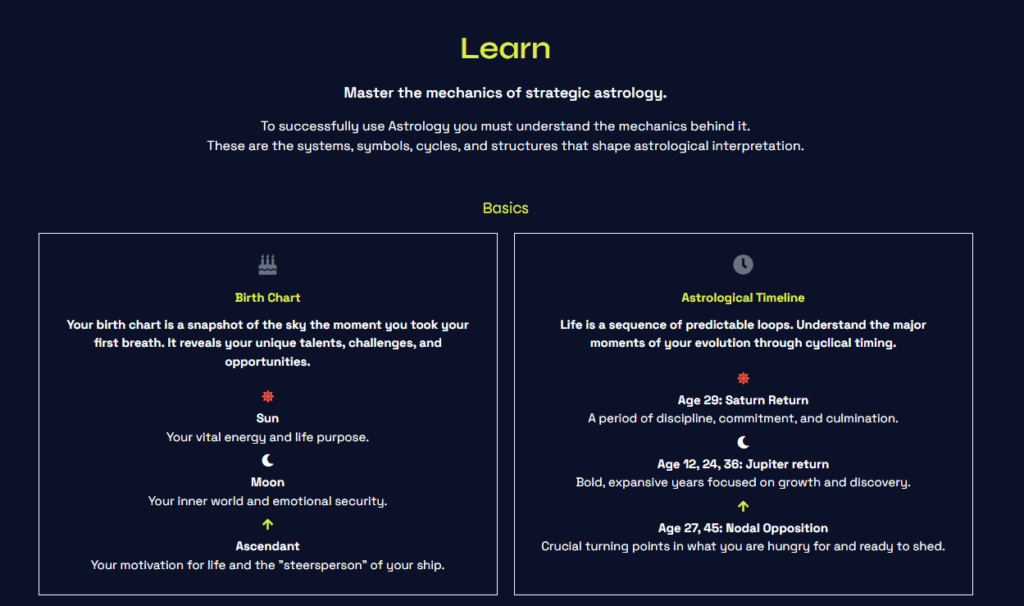
If you want to continue learning the mechanics of astrology, Astrology SA’s educational resources offer a useful place to study birth charts, rising signs, houses, aspects, orbs, retrogrades and transits in a structured way. You can also subscribe to Astrology SA for ongoing guidance and learning resources that connect astrological cycles with practical self-understanding.
A simple transit practice
Choose one transit that is currently active in your chart.
Write down:
- The transiting planet.
- Its sign and house.
- The natal planet or angle it contacts.
- The aspect.
- The approximate orb.
- Whether the contact is applying or separating.
- What has changed in your life since the transit began.
- What decision, habit or structure the transit appears to be asking you to examine.
Do not look only for external events. Transits often begin as changes in perception.
A Pluto transit may first appear as a loss of tolerance for superficiality. A Saturn transit may begin as an awareness that your existing routine cannot support your ambitions. A Jupiter transit may show up as a new belief in your capacity before the external opportunity arrives.
Record what happens. Astrology becomes more precise when you compare symbolism with lived experience over time.
For continued study, you can explore Astrology SA’s learning resources. The goal is not to outsource your decisions to the stars. It is to develop enough chart literacy to participate more consciously in your own life.
The chart is a tool, not a verdict
You are more than your Sun sign, but you are also more than your chart.
A natal chart describes tendencies, capacities, tensions and timing patterns. It does not eliminate free will, context or change. The chart may show a strong instinct, but you decide whether to act on it responsibly. It may describe a difficult pattern, but awareness gives you the possibility of responding differently.
The most valuable astrology is not the astrology that tells you who you are forever.
It is the astrology that helps you recognise who you are becoming.
FAQs
What is a natal chart in astrology?
A natal chart is a map of the sky calculated for the exact date, time and location of your birth. It includes planets, zodiac signs, houses and aspects, which astrologers interpret as a symbolic picture of personality, life themes and developmental potential.
How do I read my birth chart for personal growth?
Begin with your Sun, Moon and Ascendant, then identify your chart ruler, house placements and strongest aspects. Look for repeating themes rather than interpreting isolated placements. Use the chart to observe patterns, strengths, needs and areas requiring conscious development.
What are the twelve houses in astrology?
The twelve houses represent different areas of life, including identity, money, communication, home, creativity, work, relationships, intimacy, education, career, community and spirituality.
What do aspects mean in a birth chart?
Aspects are geometric angles between planets. They describe how different psychological functions interact. Conjunctions combine energies, oppositions create polarity, squares generate tension, trines support flow and sextiles indicate opportunities for development.
What are transits in astrology?
Transits are the current movements of planets in relation to your natal chart. They can activate planets, houses and angles, highlighting periods of change, growth, pressure, opportunity or personal development.
What does orb mean in astrology?
An orb is the distance allowed between two planets or chart points for an aspect to remain active. The closer the planets are to exact aspect, the more concentrated the contact is generally considered. Astrologers may use different orbs for different planets and aspects.
Can astrology predict the future accurately?
Astrology is better understood as a symbolic timing and reflection system than as a guarantee of fixed events. It can help identify themes, cycles and periods of heightened attention, but personal choices, circumstances and practical action influence outcomes.
How can I use astrology for career and business decisions?
Study transits to the Midheaven, tenth house, second house, sixth house, chart ruler and natal planets connected with work and resources. Use those insights alongside financial planning, professional advice, market research and realistic timelines.
Is an exact birth time necessary for a birth chart?
An exact birth time is especially important for calculating the Ascendant, Midheaven and houses. Planetary signs and many planet-to-planet aspects may still be available without it, but the interpretation will be less precise.