
Keeping the peace is not the same thing as being at peace.
Venus entered Libra on August 6, 2026, returning to the sign traditionally associated with partnership, attraction, fairness and mutual exchange. Venus remains in Libra until September 10, then returns to the sign during its retrograde cycle from October 25 to November 13. That makes 2026 a significant year for examining what we call love, what we tolerate in the name of harmony, and whether our relationships are genuinely reciprocal.astrostyle
This is not a generic Venus-in-Libra horoscope. It is a relationship audit.
Venus in Libra asks a more difficult question than “Will I meet someone?” or “Is my partner my soulmate?”
It asks:
Is this relationship mutual?
Not perfectly equal every day. Not mechanically divided down the middle. Mutual.
There is a difference.

Venus in Libra meaning: the psychology of mutuality
Venus describes what we value, how we attract, what gives us pleasure and how we relate to others. Libra is Venus’s traditional home sign, so this transit amplifies the planet’s relational intelligence. We notice tone, manners, beauty, cooperation and the subtle signals that tell us whether a connection feels welcoming or unsafe.
At its healthiest, Venus in Libra is not passive. It is relationally skilled.
It understands that intimacy is built through attention. You remember what matters to the other person. You make room for their perspective. You repair after conflict. You allow affection to move in both directions.
But Libra has a shadow.
The desire for harmony can become an aversion to truth. The instinct to negotiate can turn into endless indecision. The wish to be liked can make a person over-accommodating, conflict-avoidant or quietly resentful.
This is why Venus in Libra relationships can look peaceful while feeling emotionally expensive.
A person may say, “It’s fine,” because they want to preserve the atmosphere. They may agree to plans they dislike, accept an apology without changed behaviour, or keep their concerns small enough to remain lovable.
That is not mutuality. That is self-erasure with good manners.
Compromise or self-abandonment?
Compromise is often treated as proof of love. Sometimes it is. Sometimes it is the mechanism by which one person slowly disappears.
Healthy compromise has three characteristics:
- Both people understand what is being negotiated.
- Both people retain a meaningful sense of choice.
- The agreement can be revisited when circumstances change.
Self-abandonment has a different pattern. One person repeatedly gives up preferences, boundaries, friendships, values or ambitions, while the other person experiences that flexibility as normal.
Consider a couple deciding where to live.
One partner receives a promotion in another city. The other agrees to relocate, not because the move works for them, but because they fear being labelled unsupportive. They abandon their community, postpone their own career and tell everyone they are excited.
That is not automatically an act of devotion. The deciding factor is whether the person had genuine space to say no.
A compromise may require sacrifice. It should not require dishonesty about the cost.
Try asking:
- What am I choosing?
- What am I surrendering?
- Has my partner made a comparable adjustment?
- Can I speak honestly about my reservations without punishment?
- Will this decision still feel like mine six months from now?
Venus in Libra does not ask you to refuse every inconvenience. It asks you to notice whether flexibility is shared or extracted.

Why keeping the peace becomes a problem
Peacekeeping can begin as emotional intelligence. You notice tension, soften your language and prevent unnecessary escalation. Over time, however, peacekeeping can become a role.
You become the one who manages the mood.
You monitor your partner’s reactions. You edit your opinions. You apologise first, even when you are hurt. You avoid subjects that might create discomfort. You tell yourself that the relationship is stable because there are no obvious arguments.
But the absence of conflict is not evidence of intimacy.
Sometimes it is evidence that one person has stopped bringing their full self into the room.
This is especially relevant during a year shaped by major collective shifts. Saturn and Neptune met at the beginning of Aries in February, placing pressure on the difference between ideals and structures. Saturn asks whether a dream can be sustained. Neptune asks whether the dream is real, or whether it is built from longing.
In relationship terms, the question becomes blunt:
Can this partnership support the life we say we want?
Uranus moved into Gemini in April, emphasising changes in communication, information and social connection. Jupiter entered Leo at the end of June, amplifying self-expression, visibility and heart-led courage. Together, these 2026 themes challenge relationships that rely on silence, outdated roles or a carefully maintained image.
The new relationship astrology is not only about compatibility. It is about communication architecture.
How do we make decisions? How do we disagree? Who gets to change? Are both people allowed to become more themselves?
Attraction is not compatibility
Venus in Libra can make chemistry feel especially compelling. A person may be charming, aesthetically appealing, socially fluent and attentive. Conversation flows. You share taste. You enjoy being seen together.
All of that matters.
None of it proves compatibility.
Attraction answers the question: “Am I drawn toward this person?”
Compatibility asks:
- Can we solve problems together?
- Do our values work in daily life?
- Can we tolerate each other’s differences?
- Do we want similar levels of closeness and independence?
- Can we speak about money, sex, family and the future?
- Do our conflict styles allow for repair?
A relationship can have intense attraction and poor compatibility. It can also have complicated synastry and excellent long-term potential.
This is where modern astrology needs to move beyond the simplistic language of “good matches” and “bad matches.” A square is not a sentence. A trine is not a guarantee. Synastry shows how two people affect one another, but it does not fully describe what they create together.
That is the territory of the composite chart.

What equality actually looks like
Equality does not mean both partners contribute the same thing in the same way.
One person may earn more money. The other may handle more domestic work. One may have greater emotional bandwidth during a particular season. The other may provide practical stability.
Equality is not identical labour. It is shared recognition.
Both people understand the arrangement. Both people’s contributions are valued. Both people can renegotiate the terms without having to launch a legal case for their own needs.
A relationship is becoming unequal when:
- One person’s preferences are treated as objective reality.
- Emotional labour is invisible unless it stops.
- One partner’s career is automatically prioritised.
- The more sensitive person is always expected to adapt.
- “Compromise” only moves in one direction.
- One person is praised for being easy while the other is allowed to be fully human.
Venus in Libra invites a cleaner standard. Ask whether the relationship has room for two subjectivities.
You are not the supporting character in someone else’s life. Neither are they in yours.
People-pleasing and the limits of performance
People-pleasing often looks generous from the outside. It can involve attentiveness, accommodation and emotional availability. The difficulty is that people-pleasing is not the same as generosity.
Generosity is freely given.
People-pleasing is often driven by fear.
The hidden contract sounds like this:
“I will make myself agreeable, and you will not reject me.”
That contract creates a fragile form of intimacy. The other person is not actually relating to you. They are relating to the version of you that has been optimised for approval.
Eventually, the performance becomes impossible to maintain. Resentment appears. Desire declines. Small requests feel invasive because there is no remaining capacity. The people-pleaser may then accuse the partner of taking advantage, while the partner insists that everything was previously agreed to.
Both experiences can be true.
A boundary introduced late can feel like a betrayal to someone who has benefited from its absence. That does not make the boundary wrong.
During Venus in Libra, practise low-stakes honesty before a major rupture forces high-stakes honesty.
Say:
- “I would prefer to stay home tonight.”
- “I need more notice before making plans.”
- “I can help with that, but I cannot take responsibility for the whole task.”
- “I disagree, and I want us to discuss it rather than smoothing it over.”
- “I love you, and this does not work for me.”
The goal is not to become difficult. The goal is to become legible.

When compromise strengthens love
Compromise strengthens a relationship when it creates more freedom for both people.
A couple may choose to alternate whose family they visit during the holidays. A friendship may adjust plans to accommodate different budgets. Business partners may divide responsibilities according to skill rather than ego. A long-term couple may protect separate hobbies because independence improves their connection.
In each case, the agreement expands the relationship’s capacity.
Healthy compromise sounds like:
“I can meet you halfway without betraying myself.”
It also includes a willingness to tolerate disappointment. Your partner can be unhappy with your boundary without having the right to override it. Your friend can want more availability without being entitled to it. Your family can prefer the old version of you without receiving access to it.
A relationship that cannot survive honest preferences is not harmonious. It is conditional.
When compromise erodes identity
Compromise becomes corrosive when it repeatedly asks one person to shrink.
Watch for decisions that require you to:
- Hide your beliefs to remain acceptable.
- Abandon important friendships.
- Give up work that gives your life meaning.
- Accept disrespect because the relationship has good moments.
- Remain emotionally available while your needs are ignored.
- Become less ambitious, expressive or visible.
- Carry responsibility for another adult’s moods.
This does not mean every difficult relationship must end immediately. It means the pattern needs to be named.
A major relationship decision should not be made solely from the emotional weather of one day. Look at the repeated structure. What happens after you speak? Is there curiosity, accountability and repair? Or do you receive defensiveness, withdrawal, ridicule or punishment?
Venus in Libra values diplomacy, but diplomacy without truth is public relations.
The relationship has a chart, too
Most people begin with natal astrology. Then they discover synastry, which places two birth charts together to examine attraction, friction and activation between the individuals.
Composite astrology takes a different approach.
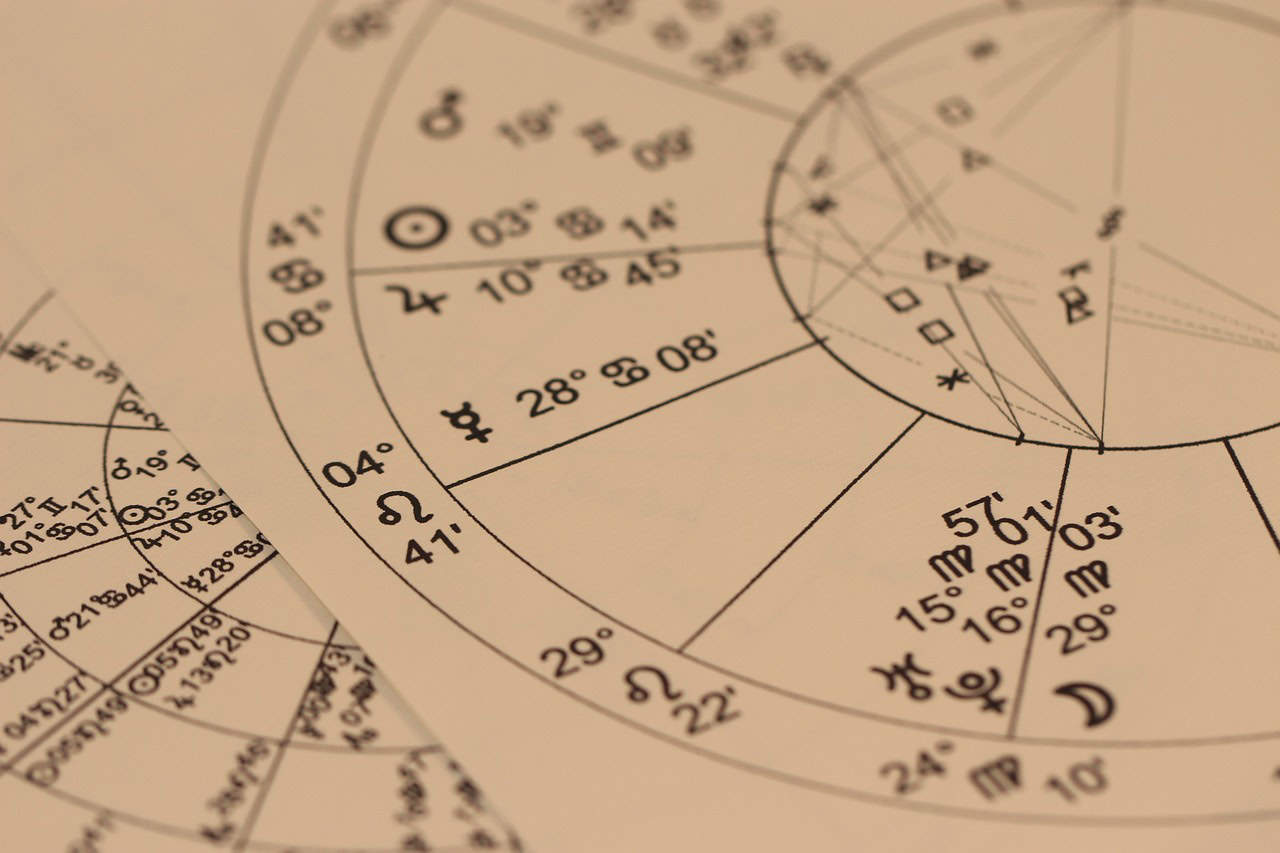
A composite chart blends the mathematical midpoints of two birth charts into a third chart representing the relationship itself. It is not simply your chart plus their chart. It describes the identity, needs, purpose and developmental challenges of the bond you create together.
Think of synastry as the interaction between two instruments.
The composite chart describes the music they make in the same room.
This makes composite charts an underused tool in modern relationship astrology. Synastry can show why your partner activates your Venus, Saturn or Moon. The composite chart can show what happens when the two of you become a unit.
A composite Libra Sun may make fairness, shared aesthetics, negotiation and social grace central to the relationship’s identity. A composite Scorpio emphasis may require privacy, emotional honesty and a willingness to confront power dynamics. A composite Aquarius signature may need freedom, friendship and an unconventional structure.
None of these is automatically better.
The question is whether you are trying to force the relationship to perform an identity it does not possess.
Why the Supercouple method matters now
The 2026 astrology landscape is pushing relationships toward conscious participation. Saturn in Aries asks each person to take responsibility for their own direction. Uranus in Gemini disrupts old communication patterns. Pluto in Aquarius continues to expose inherited ideas about power, belonging and partnership.
This is why composite charts matter now.
Many people are no longer satisfied with a compatibility score. They want to understand the relationship’s purpose. They want language for the dynamic between them, not only a verdict about whether they should stay.
The Supercouple System applies composite-chart principles to romantic, platonic and professional relationships. Its focus is not on finding a flawless match. It is on understanding the “third entity” created by two people.
At the Super Couple Hub, you can use a free chart calculator to discover your Supercouple sign, explore excerpts from the Super Couples book and watch free mini-courses. The resource is useful whether you are dating, partnered, rebuilding after a breakup, navigating a friendship or working closely with another person.
Use the calculator as a starting point, not a verdict.
Notice what the relationship’s composite Sun says about its central identity. Then look deeper. What does the composite Moon need to feel secure? Where is composite Saturn asking for maturity? Which houses describe the areas of life where the relationship has the most impact?
The sign can open the door. The full chart tells you what is inside.

Questions before a major relationship decision
Before moving in, getting engaged, ending a relationship, reconnecting with an ex or making another decision with long-term consequences, ask yourself:
- Am I choosing this because it is right for me, or because I fear disappointing someone?
- Can I express doubt without being punished?
- Is the relationship changing in response to honest feedback?
- Do I feel more like myself here, or less?
- Is this a shared decision, or am I being asked to approve a decision already made?
- What pattern has repeated, even after we discussed it?
- What would I advise someone I love if they described this dynamic?
- Am I confusing intensity with intimacy?
- What does this relationship make possible for both of us?
- Are we creating a life together, or am I adapting to someone else’s life?
Astrology can reveal patterns. It cannot make the decision for you.
That is its value.
A chart gives you language for what you may already know but have not yet been willing to say.

Healthy love is not perfectly balanced
Healthy love is not a permanent state of perfect harmony. People get tired. Priorities change. One partner sometimes gives more. The other sometimes needs support.
The measure is not whether the scales remain mathematically even.
The measure is whether both people can return to the table.
Venus in Libra asks us to stop confusing smoothness with safety. It asks us to examine the agreements beneath the romance. It asks whether our kindness includes ourselves.
Attraction may begin the story. Compatibility may sustain it. Consciousness determines whether the relationship becomes a place where both people can remain whole.
If you want to explore that third entity more seriously, visit the Super Couple Hub. Calculate your Supercouple sign, read the introductory material and use the insights as prompts for better conversations.
The point is not to become a perfect couple.
The point is to understand what you are building together, and whether both of you are allowed to live inside it.
FAQs
What is the meaning of Venus in Libra in relationships?
Venus in Libra highlights attraction, fairness, diplomacy, cooperation and reciprocity. In relationships, it can encourage negotiation and repair, but its shadow may include people-pleasing, conflict avoidance and suppressing personal needs to maintain harmony.
What does Venus in Libra 2026 mean for love?
Venus in Libra 2026 places greater focus on mutual effort, communication, equality and relationship agreements. Venus is in Libra from August 6 to September 10, 2026, and returns to Libra during its retrograde cycle from October 25 to November 13.
What is the difference between a synastry chart and a composite chart?
A synastry chart compares two natal charts to show how two people affect one another. A composite chart blends the two charts into a third chart that represents the relationship as an entity with its own identity, needs and developmental themes.
Can a composite chart show compatibility?
A composite chart can describe how a relationship functions, what it prioritises and where it may experience pressure. It should be interpreted alongside both natal charts and synastry. No single chart can guarantee compatibility or determine whether a relationship will succeed.
What is a Supercouple sign in astrology?
A Supercouple sign is based on the sign of the composite Sun. It describes the central identity and purpose of the relationship, whether the connection is romantic, platonic or professional.
Can a composite chart reveal a karmic relationship?
Composite astrology can help identify recurring themes, obligations and developmental challenges within a relationship. Some astrologers interpret strong Saturn, Pluto or lunar-node contacts as karmic indicators, but “karmic” should not be used to justify harmful behaviour or make a relationship seem unavoidable.
Can friends and business partners use the Supercouple calculator?
Yes. The Supercouple approach can be applied to meaningful non-romantic relationships, including friendships, family dynamics and professional partnerships. The chart describes the shared dynamic, not only romantic chemistry.
Does a difficult composite chart mean a relationship is doomed?
No. Challenging composite placements can describe work that requires maturity, honesty or structure. Supportive placements do not eliminate conflict. The most useful question is whether both people are willing and able to work consciously with the relationship’s patterns.